


Arena de sílice frente a perlas de vidrio para filtración de agua en 2026
2026-03-05
In the rapidly evolving landscape of municipal and industrial water purification, selecting the optimal filtration media is no longer just about meeting basic compliance—it is about maximizing operational ROI and environmental sustainability. For decades, traditional silica sand has been the default standard across the globe.
However, as facilities face stricter discharge regulations and soaring energy costs in 2026, engineers are demanding smarter, more efficient alternatives. The industry is currently witnessing a massive engineering shift toward advanced glass media, fundamentally changing the economics and fluid dynamics of modern water treatment systems.
The Bottleneck of Traditional Filtration: Why Silica Sand is Failing
To understand the shift, we must first analyze the physical limitations of traditional media. Silica sand, while cheap upfront, introduces severe hidden costs over its lifecycle.
The Channeling Effect and Head Loss: Over time, silica sand beds compact and calcify under constant water pressure. This inevitably leads to channeling—a phenomenon where water carves specific, narrow paths through the media bed. When channeling occurs, water bypasses the filtration process entirely, leading to poor water quality and rapid spikes in pressure drop (head loss).
Biofouling and Bacterial Growth: The rough, highly porous surface of crushed silica sand creates an ideal breeding ground for bacteria, algae, and organic matter. This biofilm buildup not only contaminates the filtered water but also requires aggressive, continuous chemical treatments (like chlorine) to mitigate.
Poor Backwashing Efficiency: Sand is extremely dense and heavy. To effectively fluidize a compacted sand bed during a backwash cycle, massive amounts of water and high-powered pumps are required. This translates to wasted water resources and bloated electricity bills.
The Engineering Marvel: How Filtration Glass Beads Work
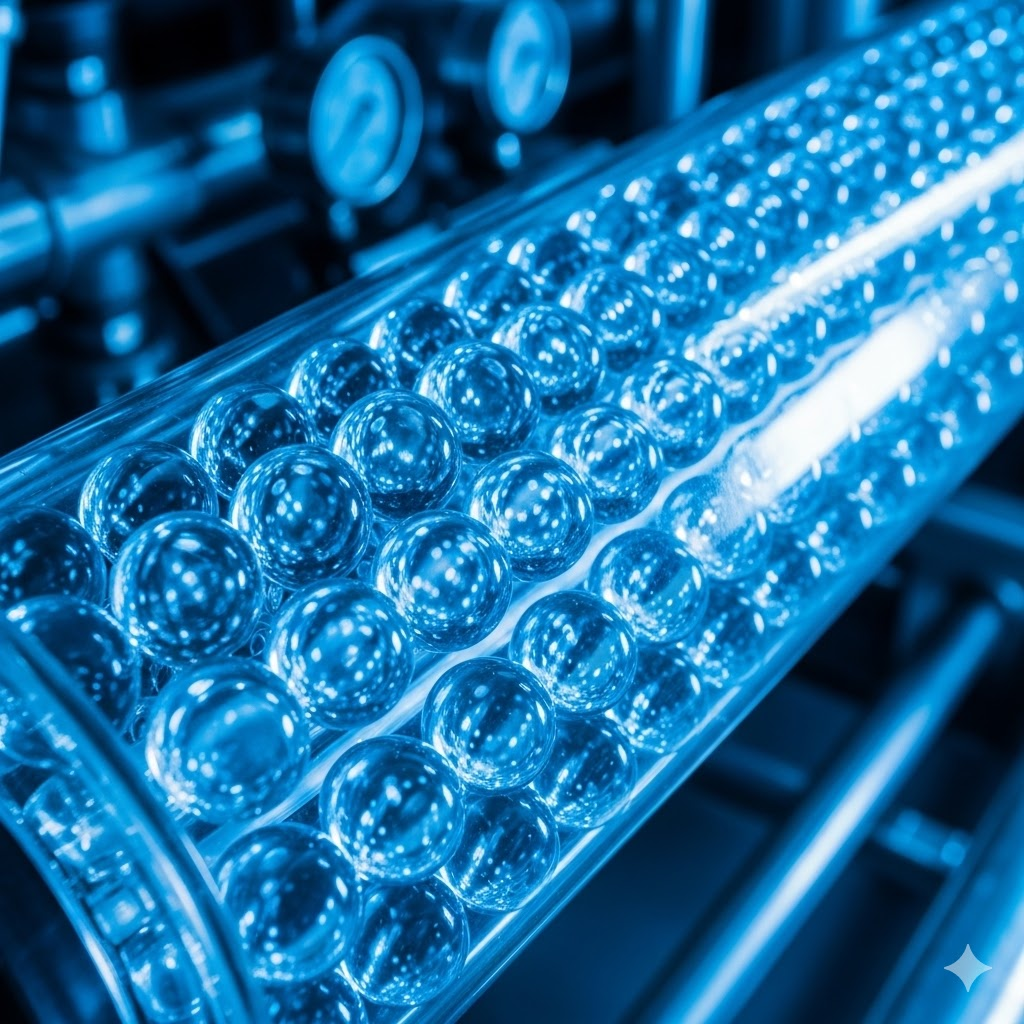
Engineered specifically for heavy-duty applications, high-quality Water Treatment Filtration Glass Beads are transforming the physical mechanics of filtration. Manufactured from virgin glass using advanced thermal processes, these beads possess a perfectly smooth, spherical geometry and a unique surface chemistry that alters how particles are captured.
Electrostatic Turbidity Reduction: Unlike traditional sand, which relies purely on physical trapping, the slight negative surface charge of the glass beads acts like a magnet for microscopic particles. This electrostatic attraction captures debris down to 3-5 microns, resulting in unparalleled turbidity reduction and crystal-clear water output that sand simply cannot achieve.
Superior Fluidization: Due to their optimized bulk density (roughly 20% lighter than sand), the beads fluidize much more easily. Facilities utilizing these high-performance pool filtration glass pearls report a drastic improvement in backwashing efficiency, reducing backwash time and water consumption by up to 30%.
Absolute Resistance to Biofouling: The ultra-smooth, non-porous surface of the beads prevents bacteria from taking hold. Without the protective habitat of a rough surface, biofilms cannot form. This cuts down chemical usage significantly and prevents the media from clumping together.
Cost-Benefit Analysis for 2026: ROI and Sustainability
When evaluating silica sand vs water treatment filtration glass beads, procurement managers must look beyond the initial purchase price. The total cost of ownership (TCO) heavily favors the engineered glass approach.
Extreme Longevity and Durability: Silica sand degrades, splinters, and typically requires a complete, labor-intensive replacement every 3 to 5 years. In stark contrast, premium Water Treatment Filtration Glass Beads boast a lifespan exceeding 10 years. Their high roundness and mechanical strength prevent them from breaking down or creating dangerous sharp shards under high-pressure flows.
Manufacturing Purity: Leading manufacturers like Anhui Tory Materials Technology Inc. utilize strictly eco-friendly virgin glass filter media. This ensures an extremely low air inclusion rate—meaning the beads are solid and won’t crush—and guarantees zero heavy metal leaching, making them perfectly safe for drinking water and commercial pools.
Energy and Water Savings: The enhanced backwashing efficiency translates directly into lower electricity usage for pumps. For large-scale industrial plants, saving 30% on backwash water means millions of gallons conserved annually, directly aligning with 2026 global ESG goals.
Relying on outdated sand filters is rapidly becoming a costly engineering liability. By upgrading to advanced Water Treatment Filtration Glass Beads, modern facilities can permanently eliminate channeling, slash their daily operating costs, and achieve a level of filtration precision that redefines industry standards.