


Pourquoi la résine MMA surpasse-t-elle les peintures traditionnelles dans les zones à fort passage ?
2026-03-27
Urban municipalities and traffic engineers face a relentless, multi-million dollar battle: keeping road markings highly visible and physically intact under the crushing, continuous weight of modern heavy-duty traffic. Traditional thermoplastic and water-based paints are failing prematurely at busy intersections, bus lanes, crosswalks, and anti-skid zones. This constant degradation forces city planners into a vicious cycle of endless repainting, skyrocketing maintenance budgets, and severe traffic disruptions. The infrastructure industry urgently needs a resilient, cold-applied material that bonds permanently to the substrate, rather than just resting fragilely on top of it.
The global engineering consensus is now aggressively shifting toward Cold Plastic technologies. By upgrading to a premium high performance MMA resin two-component traffic paint, paving contractors and city planners are fundamentally solving the adhesion crisis on high-stress pavements, securing a robust return on investment and drastically extending the lifecycle of road safety markings.
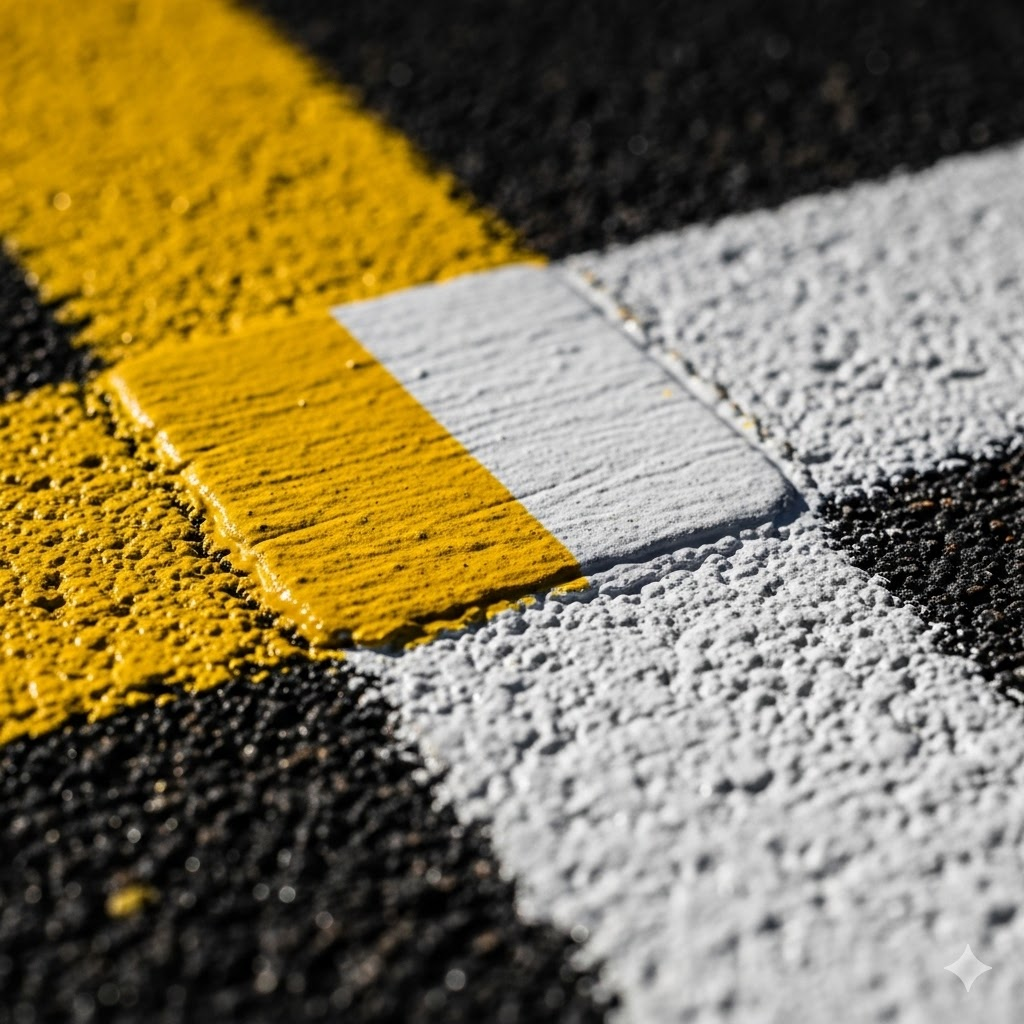
The Chemical Anatomy of Failure: Thermoplastic and Water-Based Limitations
To understand why traditional materials fail so spectacularly in high-stress zones, we must analyze their fundamental bonding mechanisms. The limitations of standard paints are deeply rooted in physical and chemical flaws, making premature failure an inevitability rather than an unpredictable accident.
Surface-Level Physical Bonding: Hot-melt thermoplastic relies entirely on a physical melt-and-cool process. It merely sits on the surface of the asphalt or concrete matrix. Under the constant, brutal shear force of turning heavy truck tires or the scraping of winter snowplows, this weak physical bond breaks rapidly. This leads to massive chunking, peeling, and the complete loss of retroreflective glass beads.
Thermal Degradation and Brittleness: Standard road paints and hot-melt materials are highly sensitive to seasonal temperature fluctuations. In sub-zero winter conditions, thermoplastic becomes extremely brittle, fracturing under the slightest impact. Conversely, in scorching summer heat, it softens, deforms, and tracks under vehicle tires, destroying the crisp lines required for autonomous vehicle (AV) lane detection.
The Hidden Costs of Continuous Maintenance: Water-based paints, while boasting a lower initial price point and lower VOC emissions, suffer from terrible mechanical durability. In high-traffic scenarios, they wear away to nothing in a matter of months. This forces maintenance crews to repeatedly shut down lanes for reapplication, generating massive hidden costs in traffic control and labor.
Decoding the Polymerization: How Methyl Methacrylate Achieves Superior Adhesion
Unlike conventional hot-melt or evaporation-based materials, Methyl methacrylate (MMA) undergoes an intense exothermic chemical reaction. This is not a simple drying process; it is a rapid polymerization that fundamentally alters the molecular relationship between the traffic paint and the road surface.
Deep Chemical Cross-Linking: When the liquid base resin is dynamically mixed with the peroxide hardener, the MMA resin road marking paint aggressively penetrates the micro-pores of the asphalt or concrete substrate. It chemically fuses with the pavement, creating a monolithic, interlocking bond that is practically impossible to separate. This superior adhesion is the core engineering reason it survives extreme shear forces that destroy other paints.
Exceptional Elasticity and Thermal Memory: Roads are not static; they flex under heavy loads and shift with seasonal thermal expansion. MMA resin maintains a high degree of elasticity even after reaching full cure. This crucial flexibility means the paint stretches and moves in tandem with the asphalt, completely eliminating the thermal cracking and non-peeling issues that plague rigid traditional lines.
Structural Integrity for Heavy Anti-Skid Aggregates: In high-risk friction zones—such as tight roundabouts, steep inclines, or dedicated bike lanes—traffic paint must securely hold heavy anti-skid aggregates (like calcined bauxite or large glass beads). MMA’s robust chemical matrix locks these aggregates in place with a vice-like grip, ensuring long-lasting friction coefficients and superior retroreflectivity over years of abuse.
High-Risk Application Zones: Where Two-Component Systems Dominate
The exceptional physical properties of cold plastic make it the only logical choice for specific, high-stress infrastructure zones where failure is not an option.
Urban Intersections and Stop Lines: These areas endure the highest concentration of braking and accelerating forces. Traditional paints strip away quickly here. MMA resin resists the extreme friction of turning tires, maintaining crisp, visible stop lines and crosswalks to ensure pedestrian safety.
High-Friction Surface Treatments (HFST): For sharp curves and accident-prone zones, MMA serves as the ultimate binder for high-friction aggregates, dramatically reducing braking distances and wet-weather skidding accidents.
Airport Tarmacs and Heavy Industrial Yards: Jet fuel spills, heavy forklift traffic, and massive cargo weights demand a chemical-resistant and crush-proof marking solution. MMA’s chemical inertness after curing makes it highly resistant to oil, grease, and aviation fuels.
Total Cost of Ownership (TCO) and Operational Efficiencies
Beyond the raw material science, MMA resin delivers unparalleled operational efficiencies during the application phase, making it the premier economic choice for modern 2026 infrastructure projects.
Adjustable Dry Time (Rapid Curing): One of the most significant logistical pain points in road maintenance is lane closure time. MMA features an adjustable dry time; the chemical reaction can be precisely calibrated by contractors to cure in as little as 10 to 30 minutes, regardless of cold ambient temperatures. This allows traffic lines to be opened almost immediately, slashing labor hours and minimizing public traffic jams.
Extreme UV Resistance: Standard safety yellow or red paints oxidize and fade quickly under harsh ultraviolet sunlight. High-quality MMA formulations possess extreme UV resistance, locking in color vibrancy and luminance for years without chalking. This ensures compliance with strict transportation department visibility regulations.
The Ultimate Lifecycle ROI: While the upfront per-gallon cost of MMA is higher than water-based paint, the Total Cost of Ownership (TCO) tells a vastly different story. A premium two-component traffic paint solution outlasts thermoplastic by 3 to 5 times. When project managers calculate the eliminated costs of complex traffic management setups, night-shift labor, and repeated material purchases for frequent repainting, MMA provides the absolute highest ROI in the global road marking sector.

