


Microesferas de vidro para sistemas de sinalização viária de dois componentes
2026-09-21
Índice
Introdução
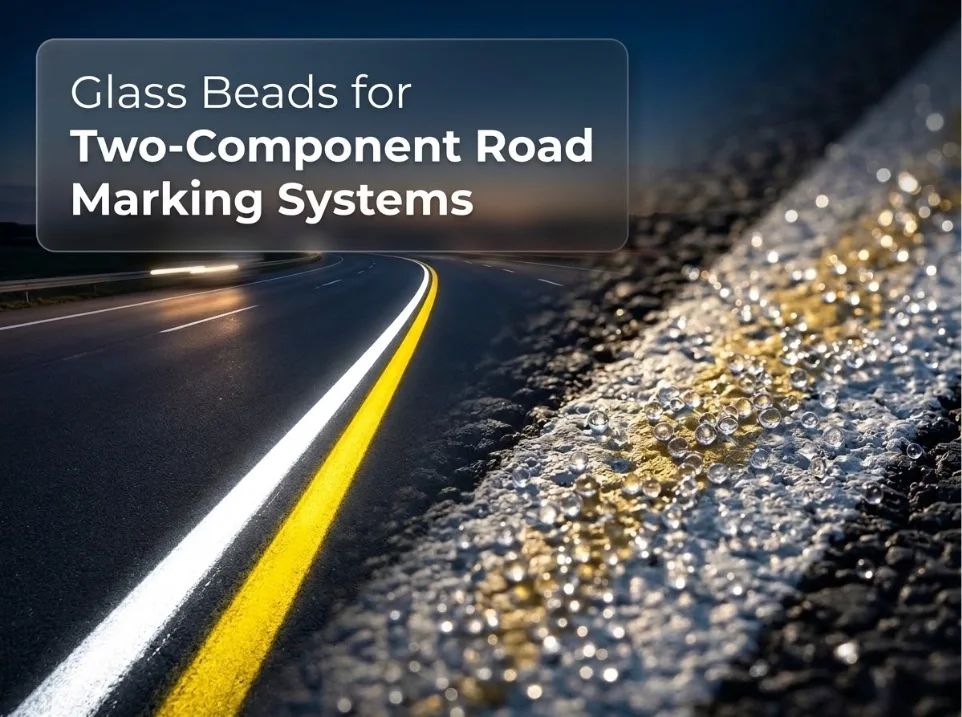
Traffic safety is a paramount concern for urban planners, highway authorities, and infrastructure developers worldwide. The cornerstone of nocturnal and adverse-weather driving safety relies heavily on the visibility of pavement delineations. As infrastructure technologies advance, traditional solvent-based paints and standard thermoplastics are increasingly being replaced by more advanced materials. Among these, two-component (often referred to as cold plastic or plural-component) materials have emerged as a superior solution due to their exceptional durability and longevity. However, the raw material itself is only half of the safety equation. To achieve the critical nighttime visibility required for driver safety, specialized reflective media must be integrated. The application of high-quality glass spheres is essential in creating retroreflectivity. This comprehensive guide explores the technical intricacies, application methodologies, and material specifications required when utilizing these reflective spheres in combination with advanced methyl methacrylate (MMA) and other plural-component binders.
Understanding Two-Component Road Marking Technology
Before delving into the reflective media, it is vital to understand the binder system itself. Plural-component systems primarily utilize a methyl methacrylate (MMA) or epoxy base. Unlike traditional waterborne paints that dry via evaporation, or thermoplastics that cure through cooling, these modern solutions cure through a rapid exothermic chemical reaction. This is initiated when a base resin is mixed with a liquid or powder catalyst (typically benzoyl peroxide) immediately prior to, or during, the application process.
The resulting matrix is incredibly resilient. It forms a strong mechanical and chemical bond with both asphalt and concrete substrates. The material is highly resistant to snowplow damage, heavy traffic wear, and extreme temperature fluctuations. Because the curing process is a cross-linking chemical reaction, the liquid binder undergoes a specific viscosity curve as it hardens. This unique curing profile dictates exactly how and when the reflective media must be applied to ensure optimal embedment and retention.
The Science of Retroreflectivity
Retroreflectivity is the phenomenon where light rays from a vehicle’s headlights enter a transparent sphere, refract (bend) as they pass through the medium, strike the pigmented binder at the back of the sphere, and reflect directly back to the light source—and consequently, the driver’s eyes.
For this physical process to function optimally in a highway environment, three factors must align:
- Índice de refração (IR): The optical density of the sphere determines how sharply the light bends. Standard highway applications typically use an RI of 1.5, while high-performance applications may require an RI of 1.9 for enhanced wet-night visibility.
- Clarity and Roundness: The spheres must be perfectly round and free of opaque inclusions or air bubbles. Irregular shapes will scatter light randomly rather than directing it back to the driver.
- Embedment Depth: The optimal embedment depth for a reflective sphere is exactly 50% to 60% of its diameter. If embedded too deeply, the light cannot enter; if embedded too shallowly, the sphere will be easily dislodged by traffic abrasion.
The Compatibility Challenge: Why Specific Reflective Media is Required
Plural-component binders present a unique challenge for reflective media application. Because the chemical curing process is so rapid (often track-free within 10 to 30 minutes, depending on ambient temperature and catalyst dosage), the surface tension and viscosity of the resin change dynamically.
Standard uncoated spheres, which might work perfectly fine in slow-drying waterborne paints, often fail in cold plastic applications. They may sink completely to the bottom of the resin film before it cross-links, or they may fail to adhere chemically to the synthetic resin matrix, leading to premature loss of retroreflectivity.
To solve this, spheres designed for these advanced binders undergo strict surface treatments. A highly specialized silane coupling agent is typically applied to the surface of the glass during manufacturing. This microscopic chemical coating acts as a bridge, forming a covalent bond between the silica structure of the sphere and the acrylic or epoxy structure of the binder. Furthermore, moisture-proof coatings may be applied to prevent clumping in the pressurized dispensing tanks, ensuring a consistent, even flow during high-speed application.
Technical Specifications Comparison
Below is a comparison table outlining how plural-component systems compare to traditional marking types, highlighting the critical role of reflective media integration.
| Feature / System Type | Waterborne Paint | Hot-Melt Thermoplastic | Two-Component (MMA/Epoxy) |
| Mecanismo de cura | Solvent/Water Evaporation | Thermal Cooling | Exothermic Chemical Reaction |
| Typical Lifespan | 6 – 12 Months | 2 – 4 Years | 4 – 8+ Years |
| Binder Viscosity | Baixo | Alto | Medium to High (Dynamic) |
| Media Embedment Control | Poor (sinks easily) | Good (melts around bead) | Excellent (with timed drop) |
| Surface Treatment Needed | Moisture-proof | Standard Adhesion | Advanced Silane Coupling |
| Snowplow Resistance | Baixo | Medium | Muito alto |
| Visibilidade em noite chuvosa | De ruim a moderado | Moderado a Alto | Exceptional (Profiled/Structured) |
Size Gradation and Performance Optimization
The diameter of the reflective spheres plays a massive role in performance, particularly in wet conditions. Standard highway gradations (such as AASHTO M247 Type 1) consist of relatively small spheres, typically ranging from 150 to 850 microns. While these provide excellent dry-night visibility, a film of rainwater can cover these small spheres, negating their refractive properties and causing light to scatter away from the driver.
For modern infrastructure projects utilizing thick-build plural-component binders (applied at 40 to 120 mils), larger spheres (Type 3 or Type 4, ranging from 1mm to 2mm in diameter) are highly recommended. These larger “megaspheres” protrude above the water film during heavy rain, maintaining critical line visibility.
In practice, high-performance delineations use a proprietary blend or a double-drop system. A dispensing gun will first drop large spheres for wet-weather visibility, immediately followed by a secondary drop of smaller spheres to fill the interstitial spaces and provide maximum dry-weather retroreflectivity. The thick nature of MMA and epoxy binders makes them perfectly suited to hold these larger, heavier spheres securely in place.
Application Methodology: The Drop-On Technique
Applying these materials requires sophisticated striping trucks equipped with specialized plural-component delivery systems. The resin and catalyst are kept in separate stainless-steel tanks and only meet at the impingement mixing gun just inches above the pavement.
Immediately behind the binder spray nozzle sits the pressurized bead dispenser. The timing, pressure, and angle of this dispenser are critical.
- Dispensing Pressure: The spheres must be injected into the liquid binder with sufficient kinetic energy to break the surface tension, but not so much force that they are driven against the pavement substrate.
- Timing: Because the chemical cross-linking begins immediately, the reflective media must be applied within a fraction of a second after the binder hits the road.
- Volume: Standard application rates typically range from 6 to 12 pounds of spheres per gallon of binder, though structured or profiled markings may require higher volumes to ensure complete surface coverage on vertical acoustic profiles.
Quality Control and Testing Standards
To ensure that the final highway delineation meets federal and international safety standards, rigorous testing is conducted both in the laboratory and on the highway. Manufacturers must comply with strict standards such as EN 1423 (European standard for drop-on materials) or AASHTO M247 (North American standard). These regulations dictate the exact percentage of perfectly spherical particles (usually requiring >80% true spheres), the allowable maximums for air inclusions, and the chemical stability of the silane coatings.
Post-application, highway engineers use handheld or dynamic vehicle-mounted retroreflectometers to measure the specific luminance (measured in millicandelas per square meter per lux, or mcd/m²/lx). A high-quality cold plastic line properly saturated with appropriately coated reflective media will regularly exceed initial readings of 600 mcd/m²/lx and maintain readings above 250 mcd/m²/lx for several years under heavy traffic.
Troubleshooting Common Application Issues
Even with premium materials, application variables can affect final performance. The table below outlines common issues and their technical solutions.
| Observation | Causa provável | Corrective Action |
| Low Initial Retroreflectivity | Spheres embedded too deeply (>60%). | Decrease dispensing pressure; check binder viscosity (ambient temp may be too high). |
| Rapid Loss of Reflectivity | Spheres shedding; weak adhesion. | Ensure silane-coated media is being used; check catalyst mix ratio for proper curing. |
| Uneven Light Return | Clumping in the dispensing tank. | Use moisture-proof coated spheres; inspect air lines for moisture contamination. |
| Poor Wet-Night Visibility | Spheres are too small to break water film. | Switch to a double-drop system utilizing larger (Type 3/4) high-index spheres. |
Economic and Environmental Advantages
While the initial material and equipment costs for cold plastic systems heavily infused with specialized reflective media are higher than traditional paints, the lifecycle cost-benefit analysis heavily favors the advanced system.
The longevity of these cross-linked polymers means roads require restriping every 5 to 8 years, rather than annually. This drastically reduces the labor costs, traffic disruption, and danger to highway workers associated with frequent maintenance. Furthermore, modern plural-component binders are typically 100% solid, meaning they contain zero Volatile Organic Compounds (VOCs). When combined with silica spheres—a natural, non-toxic, and often recycled material—the result is a highly sustainable, environmentally responsible infrastructure solution.
Conclusão
The integration of high-precision reflective media into chemically cured pavement binders represents the pinnacle of current highway safety technology. By carefully controlling the refractive index, size gradation, and surface chemistry of the spheres, and precisely managing the application physics, engineers can create delineations that guide drivers safely through the most hazardous nighttime and weather conditions. As infrastructure demands grow and autonomous vehicle technologies rely increasingly on clear lane demarcations, the science of optimized retroreflectivity will continue to be a vital focus of global transportation safety.
Sobre o autor
Desde sua fundação em 2013, a TORY tem se dedicado ao desenvolvimento e fabricação de microesferas de vidro, tornando-se uma das empresas mais importantes do setor mundial, especialmente no segmento de microesferas de vidro retrorrefletivas de alta qualidade para sinalização viária. A TORY possui uma sólida capacidade de P&D, o que nos permite inovar em nossos produtos e acompanhar as mudanças do mercado.

Entre em contato conosco para obter mais detalhes sobre as microesferas de vidro para sinalização viária.
LIGUE PARA NÓS: Telefone: +86 552 716 5551 Whatsapp: +86 173 5528 7086
ENVIE-NOS UM E-MAIL: echo@cntory.com
ENDEREÇO: Rua Tianhe, nº 609, Bengbu, Anhui, China.
Perguntas frequentes
1. Why can’t I use standard uncoated glass spheres with cold plastic/MMA binders?
Standard uncoated spheres lack the specialized chemical surface treatment (typically a silane coupling agent) necessary to bond with the rapidly curing synthetic resins in MMA and epoxy systems. Without this coating, the spheres will not adhere properly to the chemical matrix and will be quickly dislodged by vehicle tires, leading to a rapid and dangerous loss of nighttime visibility.
2. What is a “double-drop” system, and why is it recommended for plural-component markings?
A double-drop system uses two separate dispensing mechanisms on the striping truck to apply two different sizes of reflective media simultaneously. Large spheres (megaspheres) are dropped first to protrude through rainwater for wet-night visibility, followed immediately by smaller spheres to fill the gaps and provide dense, bright reflection during dry conditions. Plural-component binders are thick enough to securely anchor the larger, heavier spheres, making this premium safety technique highly effective.
3. How is the required embedment depth achieved when the binder cures so quickly?
Achieving the optimal 50% to 60% embedment relies on precise equipment calibration. Because cold plastic cures via an exothermic chemical reaction rather than drying over time, its viscosity changes rapidly. The bead dispenser is positioned mere inches behind the paint gun, injecting the media under specific pneumatic pressure into the binder before it begins to cross-link and harden, locking the spheres at the perfect optical depth.

