





Drop-on vs Intermix Glass Beads: Which One Should You Choose?
2026-06-23
When it comes to global highway infrastructure, traffic safety, and modern urban planning, visibility is the ultimate currency. Navigating complex highway systems during a torrential downpour, or traversing unlit rural routes at midnight, requires highly visible pavement striping. The secret behind these luminous traffic lines lies not just in the paint itself, but in the microscopic reflective elements embedded within or resting atop the binding material. For infrastructure planners, highway engineers, and municipal authorities, selecting the correct reflective mechanism is a critical, life-saving decision.
When evaluating pavement striping materials, the industry debate between drop-on glass beads and intermix glass beads is central to achieving optimal nighttime retroreflectivity and long-term durability. Both methodologies serve the exact same fundamental purpose—bouncing artificial light back to a driver’s eyes—but they execute this function at entirely different stages of the road marking’s lifecycle.
This comprehensive guide will explore the physics, application methods, longevity, and economic implications of both approaches to help you determine which configuration is optimal for your specific traffic safety project.
The Physics of Retroreflectivity in Pavement Striping
Before diving into the specific application methodologies, it is crucial to understand the underlying optical science that makes nighttime driving safe. The phenomenon is known as “retroreflectivity.”
Unlike a standard mirror that bounces light away at an opposing angle (specular reflection), or a rough surface that scatters light in all directions (diffuse reflection), a retroreflective surface catches the light from a vehicle’s headlights and channels it directly back to the source—the driver’s eyes.
This is achieved using microscopic, perfectly spherical clear particles manufactured from high-purity soda-lime or recycled cullet. When a headlight beam strikes one of these microscopic spheres, the light enters the curved front surface, refracts (bends) slightly downward, strikes the brightly pigmented white or yellow binder at the back of the sphere, and is forcefully reflected back out along the exact path it arrived.
The efficiency of this light return is measured by the Refractive Index (RI).
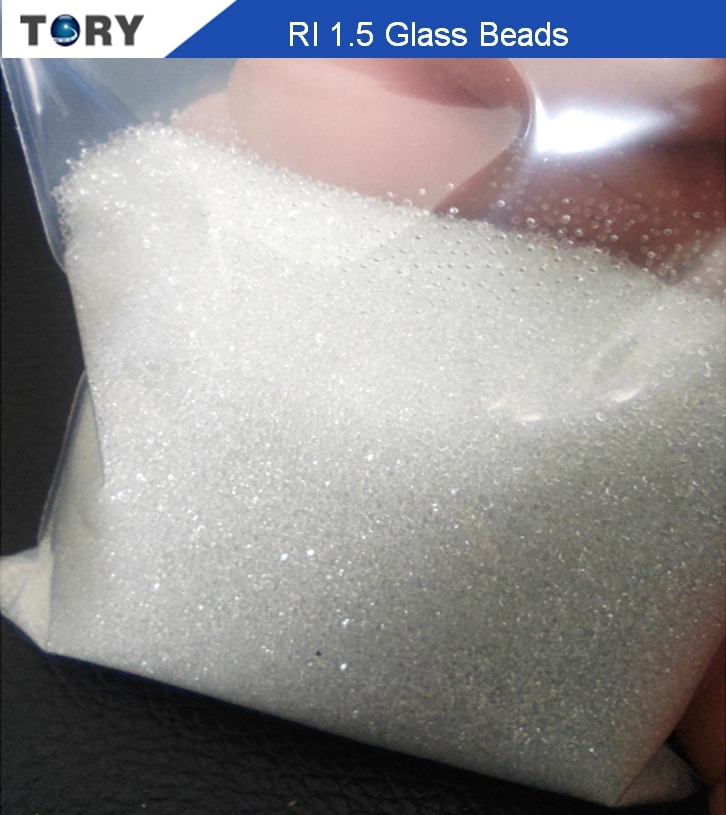
- Standard RI (1.50): Utilized in the vast majority of standard highway applications. Cost-effective and highly reliable for general nighttime visibility.
- High-Performance RI (1.70): Formulated for specialized areas requiring elevated brightness, particularly in wet-night conditions where standard spheres might be submerged under a thin film of water.
- Aviation Grade RI (1.90+): Exclusively utilized for airport runways and taxiways, providing maximum brilliance for pilots during critical landing procedures.
Understanding this optical foundation makes it easier to evaluate how the placement of these spheres—whether mixed inside the paint or scattered on top—affects overall performance.
Deep Dive: The Pre-Mixed (Embedded) Approach
The integrated, or pre-mixed, approach involves compounding the reflective spheres directly into the striping material at the manufacturing facility. This is most commonly seen with thermoplastic powders, hot-melt liquids, and certain two-component epoxy resins.
The Manufacturing and Application Process
During production, these microscopic spheres are meticulously blended into the chemical binder. Industry standards, such as the European EN 1424 or the Chinese transportation standard JT/T280-2004, typically dictate that these reflective particles should constitute between 18% to 25% of the total weight of the formulated material.
When the hot-melt or thermoplastic material is melted down in a specialized mobile kettle and extruded onto the asphalt, the reflective spheres are evenly distributed throughout the entire thickness of the line (often 90 to 120 mils thick).
The “Time-Release” Mechanism of Visibility
The most defining characteristic of the pre-mixed methodology is its time-release nature. When a pre-mixed line is freshly applied, it actually possesses very poor nighttime visibility. This is because the spheres are entirely encapsulated beneath a thin, opaque layer of the binder resin and titanium dioxide pigment. Light cannot penetrate the surface to trigger retroreflectivity.
However, as the highway experiences daily wear and tear from heavy commercial trucks, commuter vehicles, and environmental factors, the top microscopic layer of the binder is gradually abraded away. This continuous friction slowly exposes the embedded spheres hidden beneath. As the top layer of spheres is eventually crushed or dislodged by traffic over the years, a brand-new layer of spheres is simultaneously exposed from deeper within the binder.
Primary Advantages
- Unmatched Longevity: Because the reflective elements are distributed throughout the entire core of the material, the striping maintains a consistent, reliable level of nighttime visibility for years.
- Resistance to Physical Trauma: Snowplow blades and heavy machinery may scrape the surface of the line, but they will simply expose fresh reflective particles underneath rather than destroying the line’s utility.
- Lifecycle Stability: Ideal for high-traffic interstate highways where closing lanes for frequent restriping is economically and logistically unfeasible.
Deep Dive: The Surface-Applied (Broadcasted) Approach
In stark contrast to the pre-mixed methodology, the surface-applied technique involves introducing the reflective elements at the exact moment of construction, directly at the job site.
The Application Mechanics
Whether utilizing waterborne traffic paint, solvent-based acrylics, or freshly extruded thermoplastic, this method relies on applying the spheres onto a wet, receptive surface. Modern striping trucks are equipped with pressurized pneumatic spray guns or gravity-fed hoppers positioned immediately behind the paint nozzles. Milliseconds after the liquid binder hits the pavement, a highly calibrated curtain of reflective spheres is forcefully scattered over the wet line.
For this system to function perfectly, a scientific principle known as “capillary action” must occur. The liquid binder wicks up the sides of the spherical particle, ideally embedding it to exactly 50% to 60% of its total diameter. If it sinks too deep, the light cannot enter; if it sits too high, traffic will instantly brush it away.
Instantaneous Brilliance
The defining hallmark of the surface-applied method is immediate gratification. The moment the binder cures and dries (which can take as little as 90 seconds for fast-dry formulations), the pavement marking is operating at its absolute peak retroreflective capacity. The spheres sit proudly on the surface, ready to catch and return the very first headlight beam that strikes them.
Primary Advantages
- Instant Visibility: Crucial for temporary work zones, newly paved roads that must be opened to traffic immediately, and critical safety intersections.
- Lower Initial Complexity: Waterborne paints combined with surface-scattered spheres represent the most cost-effective and fastest method for striping extensive networks of secondary and rural roads.
- High Initial Brightness: Freshly applied surface systems often yield the highest initial retroreflectivity readings on handheld reflectometers.
Inherent Vulnerabilities
Because these particles sit entirely on the top surface, they bear the full brunt of environmental and mechanical abuse. High traffic volumes, abrasive street sweepers, and particularly the steel blades of winter snowplows can rapidly shear these exposed reflectors right off the pavement. Once the surface layer is gone, the line becomes effectively invisible at night, necessitating a complete restriping operation.
Head-to-Head Comparative Analysis
To streamline the decision-making process for procurement managers and civil engineers, the following table breaks down the core differences across key performance indicators:
| Performance Metric | Surface-Applied Method | Pre-Mixed Method |
|---|---|---|
| Application Stage | Broadcasted at the job site onto wet paint. | Compounded at the factory into the raw material. |
| Initial Reflectivity | Maximum. Instant brilliance upon curing. | Minimal. Requires weeks of traffic wear to activate. |
| Long-Term Visibility | Declining. Degrades as traffic shears the surface. | Sustained. New reflectors appear as the line wears down. |
| Durability against Snowplows | Poor. Highly susceptible to physical scraping. | Excellent. Scraping merely exposes new reflective layers. |
| Cost Structure | Lower initial application cost; higher long-term maintenance. | Higher initial material cost; vastly superior long-term ROI. |
| Ideal Use Cases | Temporary work zones, low-traffic rural roads, quick maintenance. | Major interstates, high-traffic urban corridors, pedestrian crosswalks. |
Advanced Considerations: Coatings and Adhesion Technologies
Merely selecting a methodology is only half the battle, one must also consider the advanced surface coatings applied to these microscopic spheres. Manufacturers often treat these particles with proprietary chemicals to alter how they interact with different binders.
1. Moisture-Proof (Silicone) Coatings
In highly humid environments, stored spheres can absorb moisture from the air, causing them to clump together in the striping truck’s hopper. This leads to uneven distribution and “bald spots” on the road. A microscopic silicone coating prevents clumping, ensuring a smooth, fluid flow through pneumatic spray guns. Furthermore, it helps the exposed top of the sphere shed rainwater faster on the road, recovering visibility quickly after a storm.
2. Adhesion-Promoting (Silane) Coatings
Particularly critical for the surface-applied method, silane coatings act as a chemical bridge between the silica in the glass and the complex polymers in the binder (like epoxy or MMA). This aggressive chemical bond locks the sphere deeply into the matrix, drastically reducing the rate at which tires can dislodge them.
The Ultimate Recommendation: The Synergistic “Dual” System
For modern infrastructure agencies, the debate is rarely a strict “either/or” scenario. The highest standard in global traffic safety, recommended by leading highway administrations, is the synergistic combination of both methodologies—often referred to as the “Double-Drop” or “Integrated + Broadcast” system.
How the Hybrid System Works
In a premium application, a municipality will specify a highly durable thermoplastic or two-component epoxy that has been manufactured with 20% integrated pre-mixed spheres.
During the actual application on the highway, the striping crew will extrude this pre-loaded material and simultaneously broadcast a top layer of surface-applied spheres directly over it.
The Resulting Lifecycle
- Day 1 to Month 6: The surface-scattered top layer provides brilliant, immediate nighttime visibility, keeping drivers safe from the very first night the road is opened.
- Month 6 to Year 1: Winter weather, snowplows, and heavy traffic slowly shear the top layer of spheres away. If this were a single-method application, the line would fail here.
- Year 1 to Year 5+: Just as the top layer is destroyed, the traffic friction wears away the top mil of the thermoplastic binder, exposing the pristine, pre-mixed spheres hidden inside. The line continuously rejuvenates itself, maintaining safe retroreflective standards for years without requiring a maintenance crew.
While this dual approach requires a higher initial capital expenditure, comprehensive Lifecycle Cost Analysis (LCCA) proves it is exponentially more cost-effective over a 10-year period due to the drastic reduction in labor, traffic control, and material costs associated with frequent restriping.
Conclusion
Securing optimal nighttime traffic safety requires a nuanced understanding of materials and their environmental interactions. Choosing between surface broadcasting and embedded compounding dictates not just the immediate brightness of a roadway, but its maintenance schedule for the next half-decade.
For quick, cost-effective, and highly brilliant initial results, broadcasting spheres onto the surface remains the industry workhorse. However, for sheer durability, sustained lifecycle performance, and resistance to harsh mechanical wear, embedding the reflective elements directly into the structural matrix of the binder is unparalleled. Ultimately, by leveraging a synergistic approach that utilizes both techniques simultaneously, infrastructure developers can guarantee 24/7 safety from the moment the paint dries until the end of the pavement’s natural life.
About the Author
Since founded in 2013, TORY has been committed to the development and manufacture of glass beads, and now becomes one of the most important role in world glass beads industry, especially in high grade optical retro reflection glass beads for road marking. TORY has strong Strong R&D capacity, this allows us to innovate our products and keep pace with market changes.
FAQs
Q1: Can surface-scattered and factory-embedded reflective methodologies be used on the exact same road project?
A: Absolutely. In fact, this is the gold standard for high-performance highway markings. By combining both methods, you achieve the immediate, high-intensity reflectivity of the surface application, paired perfectly with the long-lasting, self-rejuvenating properties of the embedded materials as the road surface wears down over time.
Q2: How do extreme weather conditions, specifically heavy rain, impact the performance of surface-applied markings?
A: Standard surface-applied markings can experience a significant drop in visibility during heavy rain. If the layer of rainwater on the road exceeds the exposed height of the spherical particle, the light from headlights bounces off the water’s surface instead of entering the reflector. To combat this, engineers use larger, high-index (RI 1.7+) spheres treated with water-repellent silicone coatings specifically designed to poke through the water film and shed moisture quickly.
Q3: What is the expected functional lifespan of a pavement marking utilizing heavily embedded reflective particles?
A: The lifespan depends highly on the binder material and traffic volume. However, a high-quality thermoplastic line formulated with a 25% ratio of embedded spheres can easily maintain acceptable retroreflective standards (typically above 100 mcd/m²/lx) for 3 to 7 years on moderately trafficked highways, significantly outlasting thin waterborne paint applications which often require annual replacement.