





How Retroreflective Glass Beads Improve Night Road Safety
2026-07-10
Table of Contents
Navigating roads at night presents unique challenges, significantly increasing the risk of accidents compared to daytime driving. The core issue often lies in reduced visibility. However, a crucial, yet often unnoticed, technology plays a monumental role in keeping drivers safe after dark: retroreflective glass beads. These tiny spheres, embedded in road markings, are the unsung heroes of night road safety.
This article delves deep into the science behind retroreflection, the intricate role of these glass beads in road safety, and how they function to guide us safely to our destinations when visibility is compromised.
The Challenge of Nighttime Driving
Before understanding the solution, it’s essential to grasp the problem. Nighttime driving accounts for a disproportionate number of traffic accidents, injuries, and fatalities worldwide. Several factors contribute to this increased danger:
- Reduced Visibility: The human eye is less effective in low-light conditions. Depth perception, color recognition, and peripheral vision are all compromised.
- Headlight Limitations: While headlights are vital, their effective range is often shorter than the stopping distance required at higher speeds. They also create a stark contrast between illuminated areas and darkness, making it difficult to spot objects outside the direct beam.
- Glare: The bright lights from oncoming vehicles can cause temporary blindness or significant visual discomfort, further impeding a driver’s ability to see the road ahead.
- Weather Conditions: Rain, fog, or snow can severely exacerbate the difficulties of night driving, scattering headlight beams and creating confusing reflections.
To mitigate these risks, road infrastructure must provide clear, continuous guidance that remains visible under various challenging conditions. This is where retroreflective technology becomes indispensable.
Understanding Retroreflection: The Science of Bouncing Light
To appreciate how glass beads work, we must first understand the concept of retroreflection.
When light hits a surface, it interacts in different ways depending on the surface’s properties:
- Diffuse Reflection: When light hits a rough surface (like asphalt or a matte painted wall), it scatters in all directions. This makes the surface visible from various angles, but only a small fraction of the light returns to the source.
- Specular Reflection: When light hits a smooth, mirror-like surface, it reflects at an angle equal to the angle of incidence. If you shine a flashlight at a mirror at a 45-degree angle, the light bounces off at a 45-degree angle in the opposite direction. Unless you are standing exactly in the path of the reflected beam, you won’t see the light.
Retroreflection is a specialized type of reflection where light is directed back precisely towards its source, regardless of the angle at which it hits the surface.
Imagine shining your car’s headlights on a retroreflective road marking. Instead of the light scattering diffusely (making the line appear dull) or reflecting away like a mirror, the light is channeled directly back towards your vehicle, right into your line of sight. This makes the marking appear incredibly bright and distinct, significantly enhancing visibility.
How Retroreflective Glass Beads Achieve This
The magic behind this directed light return lies in the precise spherical shape and refractive index of the glass beads.
When a light beam (like a headlight) strikes a glass bead partially embedded in paint or thermoplastic, the following sequence occurs:
- Refraction (Bending In): As light enters the spherical bead, it slows down and bends (refracts) due to the difference in density between the air and the glass.
- Internal Reflection: The light travels through the bead and hits the back surface—the boundary where the bead meets the pigmented road marking material (often white or yellow paint). The spherical shape and the specific refractive properties of the glass cause the light to reflect off this curved inner surface.
- Refraction (Bending Out): The reflected light travels back through the bead. As it exits the glass and re-enters the air, it refracts again.
Crucially, because of the spherical geometry, the outgoing light beam is parallel to the incoming light beam, returning the light directly to the source (the driver’s eyes).
The Anatomy of an Effective Road Marking
A high-performance road marking is not just a layer of paint; it’s a carefully engineered system. The effectiveness of retroreflection depends entirely on how the glass beads are integrated into this system.
The Marking Material (The Binder)
The base material—whether it’s water-based paint, solvent-based paint, thermoplastic, or epoxy—serves two primary functions:
- Provide Color and Contrast: The pigment (usually white or yellow) provides daytime visibility and contrast against the dark road surface.
- Hold the Beads: The material acts as an adhesive binder, holding the glass beads firmly in place. It must also serve as the reflective backing for the internal reflection process within the bead.
The Glass Beads
These are not ordinary glass spheres. They are manufactured to strict specifications to ensure optimal performance.
Key Characteristics of Effective Beads:
| Characteristic | Description | Impact on Performance |
|---|---|---|
| Refractive Index (RI) | A measure of how much light bends when entering the glass. | Higher RI beads (e.g., 1.9 or 2.1) are generally more retroreflective than lower RI beads (e.g., 1.5). The standard RI for most road markings is typically around 1.5, balancing cost and performance. |
| Sphericity (Roundness) | How perfectly round the beads are. | Only perfectly spherical beads retroreflect effectively. Imperfect or oblong beads scatter light diffusely. Quality control is crucial to ensure high sphericity. |
| Clarity | The transparency of the glass. | Cloudy or opaque beads absorb or scatter light internally, reducing the amount of light returned to the driver. High clarity is essential for maximum brightness. |
| Size/Gradation | The range of bead diameters used. | Different sizes are used for different applications. A mix of sizes ensures long-term performance (as the marking wears, new beads are exposed). |
| Embedment Depth | How deeply the beads sink into the binder. | This is the most critical factor. For optimal retroreflection, approximately 50% to 60% of the bead should be submerged in the binder, with the remaining 40% to 50% exposed to the air. |
The Importance of Embedment
Embedment is a delicate balancing act:
- Over-embedded (sunken): If the beads sink too deeply into the paint (e.g., 80% submerged), there is insufficient curved surface exposed to capture and refract the incoming light. The retroreflectivity will be poor.
- Under-embedded (floating): If the beads rest too high on the surface (e.g., 20% submerged), they will be easily dislodged by traffic or snowplows, leading to rapid loss of reflectivity and a short lifespan for the marking.
- Optimal Embedment: The sweet spot (50-60%) ensures that a large portion of the spherical surface is exposed to capture light, while a sufficient portion is anchored in the binder for durability.
Types of Glass Beads Used in Road Marking
The road marking industry utilizes different types of glass beads to address various environmental conditions and performance requirements.
1. Standard Glass Beads (Type I)
These are the most common and economical beads. They typically have a Refractive Index (RI) of 1.5. They provide good standard retroreflectivity for dry night conditions and are widely used for general highway and urban road striping.
2. High-Performance Beads (Type III or Type IV)
These beads are larger in diameter and often have a higher Refractive Index (e.g., 1.9). The larger size helps them stand out above thin layers of water, significantly improving visibility during wet night conditions. They are more expensive but crucial for areas prone to heavy rainfall.
3. Wet-Reflective Systems (Elements or Clusters)
Standard beads lose much of their retroreflectivity when submerged in water. The water alters the optics, preventing the necessary internal reflection. To combat this, specialized wet-reflective systems have been developed. These often involve specialized microcrystalline ceramic beads or complex element structures that maintain their retroreflective properties even under a film of rain.
4. Premix vs. Drop-On Beads
- Premix: These beads are mixed directly into the marking material (like thermoplastic) before application. As the marking wears down under traffic, new beads are continuously exposed, providing long-term reflectivity.
- Drop-On: These beads are applied (dropped or sprayed) onto the surface of the wet marking material immediately after it is laid down. They provide the initial retroreflectivity.
- Combined System: The most effective and durable markings often use a combination of both—premix beads for long-term performance and drop-on beads for immediate visibility.
The Process: How Beads are Applied to Roads
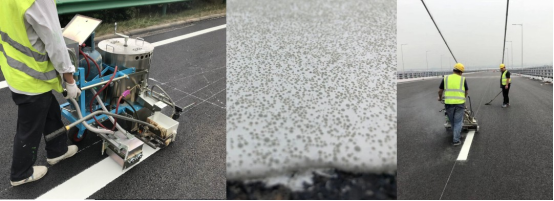
The application of retroreflective markings is a specialized process requiring precision equipment and skilled operators. The goal is to achieve an even distribution of beads with the optimal embedment depth.
- Surface Preparation: The road surface must be clean, dry, and free of debris for the marking material to adhere properly.
- Material Application: Specialized trucks apply the marking material (paint or thermoplastic) at a controlled thickness and temperature.
- Bead Application (Drop-on): Immediately behind the material applicator, bead dispensers release a carefully calibrated amount of glass beads onto the wet line.
- Curing/Cooling: The material dries (paint) or cools and solidifies (thermoplastic), locking the beads into place.
The timing between the material application and the bead drop is critical. If the material is too wet or hot, the beads will sink (over-embedment). If it’s too dry or cool, the beads won’t adhere properly (under-embedment).
The Impact on Road Safety
The continuous improvement and widespread use of retroreflective glass beads have a profound impact on traffic safety.
1. Delineation and Guidance
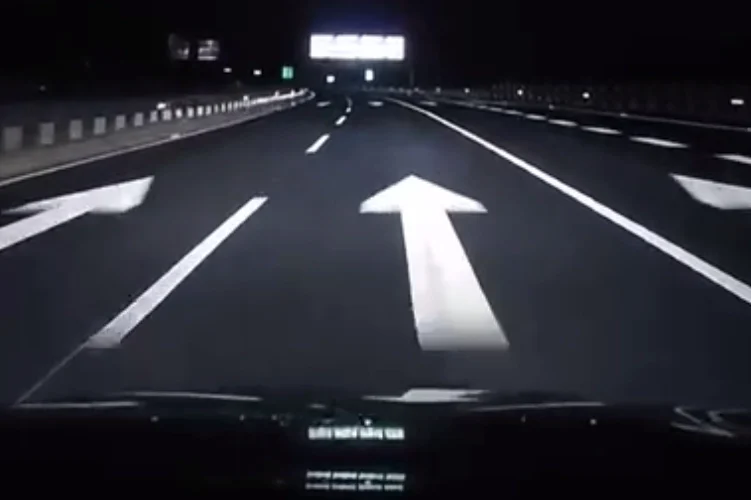
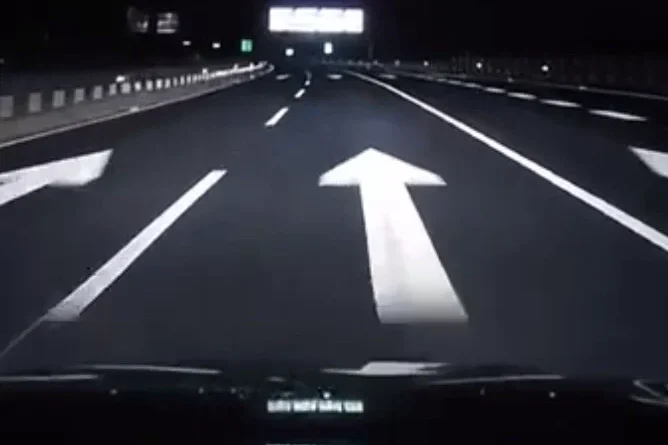
The primary function of road markings is to delineate lanes, edges, and intersections. Clear, bright markings guide drivers, helping them maintain lane position, anticipate curves, and navigate complex interchanges, especially on poorly lit roads.
2. Reducing Driver Fatigue and Stress
Straining to see faint road markings is exhausting and increases driver fatigue. High-performance retroreflective markings reduce the cognitive load on drivers, making night driving less stressful and safer over longer distances.
3. Accommodating Older Drivers
As we age, our vision naturally declines, particularly our ability to see in low-light conditions and recover from glare. Brighter, more visible road markings are essential for maintaining mobility and safety for older demographics.
4. Mitigating Weather Effects
Wet-reflective bead technologies are crucial for safety during rain. By ensuring that lines remain visible even under a film of water, these systems help prevent lane departures and accidents in challenging weather conditions.
Maintenance and the Lifecycle of Retroreflectivity
Retroreflectivity is not permanent. It degrades over time due to several factors:
- Traffic Wear: The constant friction from tires gradually wears down the marking material and dislodges or crushes the glass beads.
- Environmental Factors: UV radiation from the sun, extreme temperatures, and chemical exposure (like road salt) can degrade the binder material.
- Snowplowing: Aggressive snow removal operations can scrape away significant portions of the markings, including the embedded beads.
- Dirt and Grime: Accumulation of dirt, oil, and rubber particles on the surface of the markings blocks light from reaching the beads, reducing retroreflectivity.
Measuring and Managing Retroreflectivity
To ensure continued safety, highway agencies employ systematic maintenance programs. This involves regularly measuring the retroreflectivity of road markings using specialized instruments called retroreflectometers.
These devices simulate the geometry of a car’s headlights and the driver’s eyes to measure how much light is returning. The results are typically expressed in millicandelas per square meter per lux (mcd/m²/lx).
Agencies establish minimum acceptable threshold values. When markings fall below these thresholds, they are scheduled for restriping. This proactive approach is vital for maintaining a safe driving environment.
The Future of Road Markings
While glass beads have been the standard for decades, the technology continues to evolve.
Advancements in Bead Technology
Research is ongoing to develop beads with higher refractive indices, better durability, and more efficient wet-reflective properties. Microcrystalline ceramic beads are increasingly used in high-performance applications due to their exceptional hardness and optical efficiency.
Integration with Advanced Driver Assistance Systems (ADAS) and Autonomous Vehicles (AV)
As vehicles become more automated, the role of road markings is expanding. ADAS features like Lane Departure Warning and Lane Keeping Assist rely heavily on camera systems to detect lane markings.
These machine vision systems often “see” markings differently than human eyes. The retroreflectivity and contrast required for a machine camera to reliably detect a line, especially in adverse weather, may differ from human requirements. The industry is currently exploring specialized markings—sometimes incorporating different optical profiles or even materials visible in the non-visible spectrum (like infrared)—to better support machine vision systems.
Smart Markings
The concept of “smart” markings involves integrating sensors or communication technologies into the road striping to provide real-time information to vehicles or infrastructure managers. While still in the early stages, this represents a significant shift from passive retroreflection to active communication.
Conclusion
Retroreflective glass beads are a remarkable example of applied physics that silently saves lives every night. By capturing the light from our headlights and directing it back to our eyes, they transform dull road surfaces into clear, guiding pathways. Understanding the intricate science of their function, the critical importance of proper application (like embedment depth), and the need for ongoing maintenance highlights the complexity behind this seemingly simple technology. As driving technology advances toward greater automation, the reliance on high-quality, highly visible road markings will only intensify, ensuring that these tiny glass spheres remain a cornerstone of road safety for years to come.
About the Author
Since founded in 2013, TORY has been committed to the development and manufacture of glass beads, and now becomes one of the most important role in world glass beads industry, especially in high grade optical retro reflection glass beads for road marking. TORY has strong Strong R&D capacity, this allows us to innovate our products and keep pace with market changes.
FAQ
1. Why do some road lines disappear when it rains at night?
Standard glass beads rely on a difference in density between air and glass to bend light and retroreflect. When rain covers the marking with a thin film of water, the density difference between water and glass is much smaller than between air and glass. This alters the optical path, preventing the light from reflecting back effectively, making the lines appear dull or invisible. Specialized “wet-reflective” systems are required to overcome this issue.
2. Are retroreflective glass beads bad for the environment?
Generally, the glass beads themselves are considered inert and environmentally safe, as they are essentially tiny spheres of recycled glass. The environmental concerns primarily relate to the binder materials (the paint or thermoplastic) used to hold the beads. The industry has been moving towards more environmentally friendly, low-VOC (volatile organic compound) water-based paints and durable epoxy or polyurea systems to minimize environmental impact.
3. How often do roads need to be repainted to maintain their brightness?
The lifespan of a road marking depends heavily on the materials used, traffic volume, and environmental conditions (like heavy snowplowing). High-traffic urban roads might need standard water-based paint restriped annually or even bi-annually. Conversely, highly durable thermoplastic markings on a less-traveled rural highway can maintain adequate retroreflectivity for 3 to 5 years or more. Highway agencies use specialized equipment to regularly test the brightness and determine when restriping is necessary.