





유리 구슬의 반사율, 구형도 및 수분 함량을 평가하는 방법
2026-09-10
목차
The importance of road safety cannot be overstated, and pavement markings play a critical role in guiding drivers, especially during nighttime or adverse weather conditions. The unsung heroes of these life-saving markings are microscopic glass beads embedded in the binder or paint. These tiny spheres act as miniature lenses, capturing the light from a vehicle’s headlights and bouncing it back to the driver’s eyes—a phenomenon known as retroreflection. However, not all glass beads are created equal. To ensure optimal performance, rigorous quality control is absolutely paramount.
For manufacturers, highway agencies, and paving contractors, understanding how to systematically evaluate glass beads reflectivity, roundness, and moisture content is the cornerstone of delivering durable, high-visibility road markings. When these three parameters are carefully measured and optimized, the resulting pavement markings save lives, reduce maintenance costs, and comply with stringent international transportation standards.
Assessing Retroreflective Performance
The primary function of a glass bead in pavement markings is to reflect light back to its source. If the beads fail to perform this function, the pavement markings will be virtually invisible at night, rendering them useless when drivers need them the most. Evaluating this optical performance requires an understanding of both the physics of light and the physical properties of the glass itself.
The Science of Refractive Index (RI)
The reflective power of a glass bead is heavily dependent on its Refractive Index (RI). The RI measures the bending of light as it passes from the air into the glass. For the light to be perfectly focused on the back surface of the bead (which is embedded in the paint), the RI must be carefully controlled during manufacturing.
Standard glass beads typically have an RI of 1.50, which provides adequate visibility for standard highway applications. However, for high-performance requirements, such as airport runways or critical intersections, high-index beads with an RI of 1.90 or even 2.20 are utilized. Higher RI beads return a significantly higher percentage of light to the driver.
Methods for Measuring Reflectivity
To evaluate glass beads reflectivity accurately, professionals rely on specialized instruments and controlled environments.
1. Retroreflectometers:
The most direct way to measure the retroreflective performance of glass beads once applied is by using a retroreflectometer. This device simulates the geometry of nighttime driving. It projects a light source at a specific entrance angle (typically 88.76 degrees, representing the headlight angle) and measures the reflected light at a specific observation angle (typically 1.05 degrees, representing the driver’s eye level). The result is expressed in millicandelas per square meter per lux (mcd/m²/lx).
2. Liquid Immersion Method (for RI testing):
In a laboratory setting, the refractive index of the raw beads can be tested using the Becke Line method or by immersing the beads in liquids of known refractive indices. When the bead is immersed in a liquid with an identical refractive index, the boundary of the bead will seemingly disappear under a microscope. This confirms the optical quality of the glass batch before it is even applied to a road surface.
The Role of Embedment Depth
It is crucial to note that reflectivity is not just a product of the bead itself, but how it interacts with the binder. Maximum retroreflectivity is achieved when the bead is embedded exactly 50% to 60% into the paint. If it sinks too deep, the light cannot enter; if it sits too high, the light escapes without bouncing back, and the bead is easily dislodged by traffic. Therefore, laboratory evaluations often involve creating test panels where beads are dropped onto standard binders at controlled rates to measure the true, practical reflectivity.
Table 1: Refractive Index Categories and Application Contexts
| 굴절률(RI) | Optical Performance Level | Typical Application Area | Cost Profile |
| 1.50 – 1.55 | 기준 | Regular highways, city streets, edge lines. | Economical |
| 1.65 – 1.75 | Moderate-High | Wet-night visibility markings, high-traffic zones. | 보통의 |
| 1.90+ | Ultra-High | Airport runways, unlit rural curves, critical hazard zones. | Premium |
The Critical Nature of Spherical Integrity
While the chemical composition determines the refractive index, the physical shape of the bead dictates whether the optical system functions at all. For a glass bead to act as a retroreflector, it must be exceptionally spherical. Irregular shapes, ovals, or jagged shards of glass will scatter light in random directions rather than returning it to the driver. Therefore, when you evaluate glass beads roundness, you are directly assessing their ability to save lives.
Why Roundness Matters
The geometry of a perfect sphere allows incoming light to refract upon entry, focus precisely at the rear hemisphere, and reflect back along the same path. If a bead contains air bubbles (inclusions), is milky (opaque), or is simply misshapen, the focal point shifts, and the retroreflection is destroyed. International standards, such as AASHTO M247 and EN 1423, strictly dictate that a minimum percentage of the beads (usually 70% to 80%, depending on the type) must be true spheres.
Laboratory Testing Methodologies for Roundness
1. The Microscopic Grid Analysis: The most traditional method involves viewing a representative sample of beads under a microscope equipped with a calibrated reticle or grid. A technician manually counts the total number of beads in a specific field of view and then identifies and counts the non-spherical beads, irregular particles, and fused twins (two beads stuck together). The percentage of true spheres is then mathematically calculated. While accurate, this method is highly dependent on operator skill and can be time-consuming.
2. The Inclined Glass Plate Method (Roundness Tester): A more mechanical and standardized approach is the inclined plate tester, often referred to as a “roundness tester.” This apparatus consists of a smooth glass panel set at a specific, adjustable incline, often subject to a slight vibration.
- A pre-weighed sample of beads is introduced at the top of the incline.
- True spheres will easily roll down the glass plate and fall into a collection pan at the bottom.
- Irregular, non-spherical beads, shards, and fused particles will fail to roll and will either slide slowly, move to the sides, or remain on the plate.
- By weighing the true spheres collected in the bottom pan against the total original sample weight, an exact percentage of roundness can be determined.
3. Digital Image Analysis (DIA): In modern, high-tech manufacturing facilities, automated Digital Image Analysis is becoming the gold standard. High-speed cameras capture images of falling beads, and specialized software instantly analyzes the perimeter and diameter of thousands of individual particles per second. DIA provides a highly precise, operator-independent assessment of spherical integrity, offering a complete statistical breakdown of the batch.
Table 2: Common Physical Defects in Glass Beads
| Defect Type | 설명 | 성과에 미치는 영향 |
| Oval/Elliptical | Bead is stretched, not perfectly spherical. | Alters focal point; scatters light away from driver. |
| Fused/Satellites | Two or more beads melted together during production. | Ruins optical geometry; drastically reduces retroreflectivity. |
| Air Inclusions | Microscopic trapped air bubbles inside the glass. | Creates internal refraction; causes light to scatter internally. |
| Milky/Opaque | Cloudiness in the glass material. | Blocks light transmission entirely; zero retroreflection. |
The Danger of Moisture Retention
Even if a batch of glass spheres boasts a premium refractive index and flawless spherical integrity, its real-world application can be completely ruined by a single factor: water. To evaluate glass beads moisture content is to ensure that the product can actually be successfully applied to the pavement.
The Mechanics of Moisture Contamination
Glass beads are typically applied to road markings using a “drop-on” method. As the striping truck lays down the wet paint or thermoplastic binder, pressurized guns immediately spray the beads over the wet line.
For this process to work smoothly, the beads must flow like a dry liquid. If the moisture content is too high, the surface tension of the water causes the tiny spheres to clump together. This clumping leads to several catastrophic failures:
- Blockages: The dispensing nozzles on the striping truck can become clogged, leading to sections of the road line having no reflective properties at all.
- Uneven Distribution: Clumps of beads will fall onto the paint, creating concentrated patches of reflection and bare dark spots, rather than a uniform, highly visible line.
- Poor Embedment: Wet beads can alter the curing process of the binder, leading to improper embedment and premature failure of the marking.
Standardized Methods for Moisture Content Testing
Industry standards generally require that the moisture content of 도로 표시 유리 구슬 does not exceed 0.01% by weight. To verify this, a gravimetric analysis is the standard operating procedure.
The Oven-Drying (Gravimetric) Method:
- Preparation: A clean, dry glass or metal weighing dish is accurately weighed on a precision analytical balance to the nearest 0.001g (Weight A).
- Sampling: A representative sample of the beads (typically 50 to 100 grams) is placed into the dish, and the total weight is recorded (Weight B). The initial weight of the wet beads is (Weight B – Weight A).
- Drying: The dish is placed into a laboratory drying oven set to a temperature of 105°C to 110°C (221°F to 230°F) for a duration of typically 2 hours. This temperature is sufficient to evaporate all surface moisture without melting or altering the glass.
- Cooling: The dish is removed from the oven and immediately placed into a desiccator. A desiccator is a sealed container containing a drying agent (like silica gel) that allows the sample to cool to room temperature without absorbing any new moisture from the ambient air.
- Final Weighing: Once cooled, the dish and the dried beads are weighed again (Weight C).
- Calculation: The moisture content percentage is calculated using the formula:
- Moisture % = [(Weight B – Weight C) / (Weight B – Weight A)] * 100
Moisture-Proof Coatings and Water Repellency
To combat the realities of humid storage environments and variable weather conditions on job sites, high-quality glass beads are often treated with a specialized moisture-proof coating, typically a silicone-based fluid. This coating reduces the surface energy of the glass, preventing water from clinging to it.
To test the efficacy of this coating, technicians perform a Water Repellency Test. A small sample of coated beads is placed in a glass funnel lined with filter paper. A specific volume of distilled water is poured over the beads. If the coating is effective, the water will run right through the beads without wetting them, and the beads will remain free-flowing immediately afterward. If the beads clump and block the funnel, the coating has failed.
The Synergistic Quality Control Ecosystem
It is vital for professionals to understand that reflectivity, spherical integrity, and moisture levels do not exist in isolation. They form a synergistic ecosystem where the failure of one parameter inevitably leads to the failure of the entire system.
Imagine a scenario where a manufacturer produces ultra-high refractive index beads with flawless roundness. These beads are theoretically capable of returning maximum light to drivers in the darkest, wettest conditions. However, if the packaging is flawed and the beads absorb significant ambient humidity during shipping, their moisture content will spike. When the road contractor attempts to apply them, the dispensing guns will sputter, depositing clumped masses of beads onto the road. Because they are clumped, they cannot achieve the perfect 50-60% embedment depth. They will sit on top of the binder and be crushed by the first passing semi-truck. The exceptional optical properties and perfect roundness are entirely wasted because the moisture parameter was ignored.
Conversely, perfectly dry beads applied flawlessly by the striping truck will provide zero safety benefits if the roundness evaluation was skipped and the batch is full of jagged shards. The perfectly embedded shards will simply scatter headlights into the surrounding environment, leaving the road line invisible.
Therefore, comprehensive quality assurance demands that all three characteristics are tested rigorously for every batch produced. Robust quality control protocols protect the manufacturer from liability, ensure the contractor can perform their job efficiently, and most importantly, guarantee that taxpayers receive the safe, high-visibility infrastructure they deserve.
결론
The science of pavement markings is a complex interplay of optics, material science, and mechanical engineering. As we have explored, the ability of a road line to shine brilliantly in the dead of night is not an accident; it is the result of meticulous engineering and relentless quality control. By utilizing advanced laboratory instruments and standardized methodologies to evaluate glass beads reflectivity, roundness, and moisture content, the transportation industry ensures that our highways remain safe, navigable, and visible, no matter how dark the night may be.
저자 소개
Since founded in 2013, TORY has been committed to the development and manufacture of glass beads, and now becomes one of the most important role in world glass beads industry, especially in high grade optical retro reflection glass beads for road marking. TORY has strong Strong R&D capacity, this allows us to innovate our products and keep pace with market changes.
| 수준 | LR | 씨 | 인사부 |
| 둥글림 | >80% | >85% | 90% |
| 역반사 값 | 200-300mcd/㎡*lx | 300-500mcd/㎡*lx | 500-800mcd/㎡*lx |
| 크기 분포 | 150-1180㎛ | 100-2000㎛ | 100-2000㎛ |
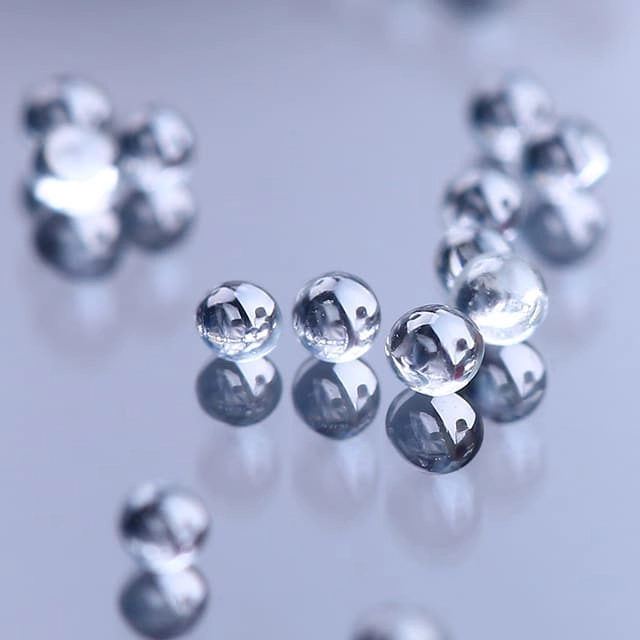
Tory supply 3 grades standard RI 1.5 glass beads, LR, MR and HR. We have different size distributions to meet your requirements. Please find the size distribution table below in “RI 1.5 Glass Beads Technical Data Sheet”.

자주 묻는 질문
How does the refractive index directly affect the performance of glass beads on the road?
The Refractive Index (RI) determines how sharply light is bent as it enters the glass bead. An RI of 1.50 bends light sufficiently for standard highway visibility. However, a higher RI (such as 1.90 or 2.20) bends the light much more efficiently, allowing a greater volume of the incoming headlight beam to be perfectly focused on the back of the bead and reflected directly back to the driver. This results in significantly brighter road markings, which is crucial for high-risk areas or wet-night conditions.
What happens if the roundness percentage of a glass bead batch falls below industry standards?
If a batch contains too many irregular, oval, or jagged particles, the optical geometry required for retroreflection is broken. Instead of returning light to the source, these misshapen particles scatter the light in random directions. Consequently, the pavement marking will appear dull and invisible to drivers at night, drastically reducing road safety and failing to meet the visibility requirements set by transportation authorities.
Why do manufacturers apply moisture-proof coatings to glass beads?
Moisture-proof coatings, typically silicone-based, are applied to prevent the glass beads from absorbing humidity from the air during storage and transportation. If beads absorb moisture, surface tension causes them to clump together. Clumped beads cannot flow smoothly through the dispensing guns on striping trucks, leading to clogged equipment, uneven distribution on the road line, and improper embedment in the paint, all of which ruin the reflective finish of the marking.